
How often does a septic tank need pumping?
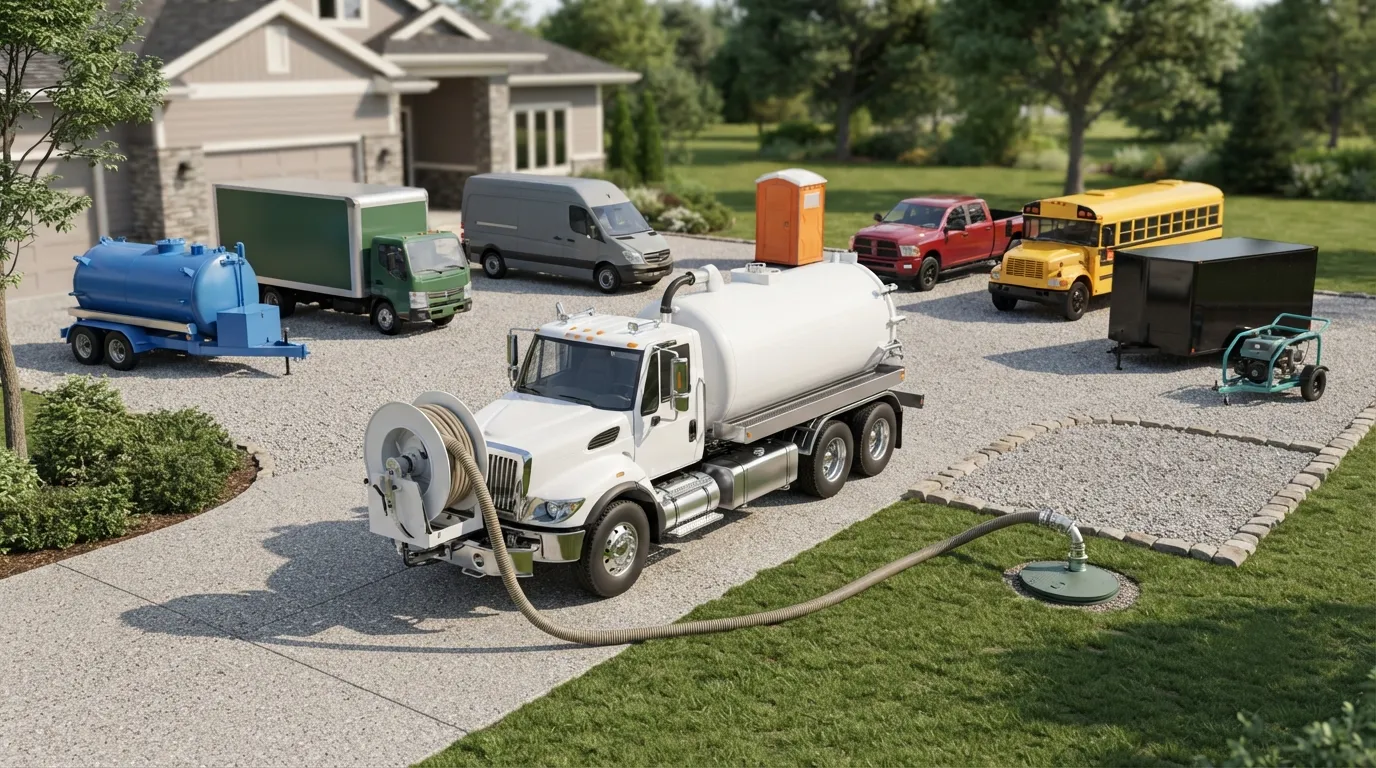
Every 3 to 5 years for a typical 1,000 gallon residential tank, and household size moves that number more than anything else. A family of six fills a tank faster than a retired couple in the same house. Tank size matters too: a smaller tank near capacity needs more frequent visits than an oversized one serving a light household. Lafayette Porta Pros logs tank size and last-pump date for repeat customers so nobody has to remember. If you are unsure where your tank falls, our septic tank cleaning page walks through the inspection we do before we quote anything. Restaurants and commercial kitchens run a different clock entirely: a grease interceptor gets pumped once fats, oils, grease and solids reach 25 percent of the liquid depth, which can mean monthly service instead of yearly. If that is your situation, see grease trap pumping instead of standard residential septic work. For a fast answer specific to your tank, request a quote and we will ask the two or three questions that actually decide the interval.
What decides how often you need service?
Household size, tank size and what goes down the drain. A tank sized for a family of four running through a family of eight fills faster, plain and simple. Garbage disposals add solids that would otherwise go in the trash, which shortens the interval. Lafayette Porta Pros sees this constantly on older Lafayette properties with tanks sized for the previous owner's household. Water softener backwash, laundry frequency and whether the home runs on well water all shift the math slightly. None of this is guesswork on our end: we measure scum and sludge layers at every visit and tell you the honest interval instead of a default number. If your property runs a holding tank rather than a leach field system, check holding tank rental for how that service differs. Curious what a checkup actually costs before you commit to a full pump? Our septic tank pumping cost page breaks down inspection versus full-service pricing.
What are the warning signs a tank needs pumping now?
Slow drains in multiple fixtures at once, gurgling in the pipes, standing water near the drain field, or a sewage smell in the yard. Any one of these on its own might be a fixture problem. Two or more at once, especially with a sulfur smell outside, usually means the tank is at or near capacity and needs pumping before it backs up into the house. Sewage backing up into a tub or toilet is not a "schedule it for next week" situation. See our full breakdown on septic tank warning signs for the complete list, or jump straight to emergency septic service if you are already dealing with a backup. Lafayette Porta Pros dispatches emergency calls the same day when the situation calls for it. Homes near Buck Creek, 10.2 miles northeast of Lafayette, and Stockwell, 10.7 miles southeast, get the same emergency response window as in-city addresses. Do not wait on a warning sign hoping it resolves itself; a full backup costs more to clean up than a scheduled pump ever would.

What does a septic pumping service include?
A full pump-out: locating and uncovering the access lid, pumping the tank completely, checking scum and sludge layer depth, and a visual inspection of the baffles and tank walls for cracking or wear. We check the outlet baffle for blockage since that is the most common cause of slow drainage after a supposedly successful pump. Trucks carry the vacuum equipment and hose length needed to reach tanks set back from the driveway, which matters on rural Lafayette properties with long access runs. We also haul the waste to proper disposal, which is included in the service call rather than billed separately. If your property runs hand-labor agricultural work with field crews, note that OSHA 1928.110 requires potable water, toilets and handwashing within a quarter mile walk of hand-labor employees, at one facility per 20 workers, a separate requirement from your home septic system. Farms coordinating both septic service and field sanitation should also look at farm and agricultural restrooms for the labor-crew side of that requirement.
What does septic tank pumping cost?
Pricing depends on tank size and access, and the table below shows the range Lafayette Porta Pros works within.
| service | duration | low | typical | high |
|---|---|---|---|---|
| septic pumping | day rate | $150 | $250 | $300 |
| septic pumping | weekend | $50 | $100 | $150 |
A standard 1,000 gallon residential tank falls toward the middle of the day-rate range under normal access conditions. Larger tanks, buried lids needing excavation, or long hose runs from the truck to the tank push a job toward the high end. Weekend pricing reflects a smaller add-on scope, not a full pump-out at a discount, so ask directly what a weekend call covers before assuming it replaces the full service. Grease interceptor pumping for restaurants runs on its own schedule and pricing tied to interceptor size rather than this residential table; see grease trap pumping for that. For side-by-side comparison against other site services, our septic tank pumping cost page and how often to pump a septic tank guide both go deeper into the variables that move a quote up or down.
Do you offer emergency septic pumping?
Yes. Lafayette Porta Pros keeps emergency slots open for backups, and same-day response is standard when a call comes in before early afternoon. A backed-up tank does not wait for a convenient appointment window, so we treat these calls differently from routine scheduled pumping. Emergency coverage extends to Americus, 12.0 miles northeast of Lafayette, and Montmorenci, 13.1 miles northwest, at the same response priority as in-town addresses. If you are dealing with a holding tank overflow rather than a traditional septic system, holding tank rental covers both emergency pump-outs and planned swap-out service for construction sites or events using temporary tanks. For non-septic emergencies like a portable toilet needing urgent service at a job site or event, see emergency porta potty rental. Construction crews juggling septic, dumpsters and fencing on one active site should start with construction site services for the full coordination picture, since scheduling one truck visit for multiple services often saves a trip charge.
Lafayette Porta Pros also handles the sanitation side of construction and events beyond septic work. If you are staffing a job site, OSHA 1926.51(c) sets toilet facility ratios: one facility for 20 workers or fewer, scaling up from there, and our how many porta potties do i need guide applies that ratio to real crew sizes. Handwashing is a separate requirement from toilet counts: 29 CFR 1910.141(d)(2) requires soap and towels or a hand-drying device at wash stations, and hand sanitizer alone does not satisfy it. See handwashing station rental or handwashing station requirements for what that means on-site. If your crew works with paints, coatings or pesticides, OSHA 1926.51(f)(1) requires washing facilities specifically for that contaminant exposure, which our portable sink rental page addresses directly.
For events needing restrooms rather than septic service, our event restroom rental and wedding restroom rental pages cover short-term needs, while standard porta potty rental and deluxe flushable porta potty compare unit types. Homeowners tackling a renovation that takes the only bathroom offline should look at home renovation porta potty. Whatever the service, request a quote or visit contact to get a truck scheduled, and our about page covers who is actually showing up at your door.
How much does septic tank pumping cost on average?
A typical residential job runs in the mid range of our day-rate pricing, with tank size, access difficulty and lid depth pushing the number up or down. Larger tanks or excavation work land higher; straightforward, accessible tanks land lower.
How much does 1,000 gallon septic tank pumping cost?
A standard 1,000 gallon tank with normal access typically falls in the middle of the day-rate band. Buried lids or long hose runs from the truck add to that. Get a firm number by describing your setup when you call.
Is septic pumping different from septic tank cleaning?
Pumping removes the liquid and solid waste. Cleaning can include that plus a more thorough scrub of tank walls and baffle inspection. Most residential visits combine both in a single call, which our septic tank cleaning page explains in detail.
Can I schedule septic pumping the same week I call?
Usually yes. Lafayette Porta Pros keeps routine slots filling within the week for standard requests, and same-day dispatch is available for active backups or emergencies through our emergency septic service line.
Does a holding tank need different service than a septic tank?
Yes. A holding tank has no leach field and needs full pump-outs on a tighter schedule since nothing drains out. See holding tank rental for how scheduling and pricing differ from standard septic pumping.
Do you serve areas outside Lafayette proper?
Yes. Coverage includes West Lafayette, Buck Creek, Stockwell, Americus and Montmorenci at the same pricing and response standards. Check service areas for the full coverage map and drive-time details for your address.
Next step
Get a delivery date
Tell us the address, the dates and the headcount. We size the order and confirm the route.