
How Does a Porta Potty Actually Work?
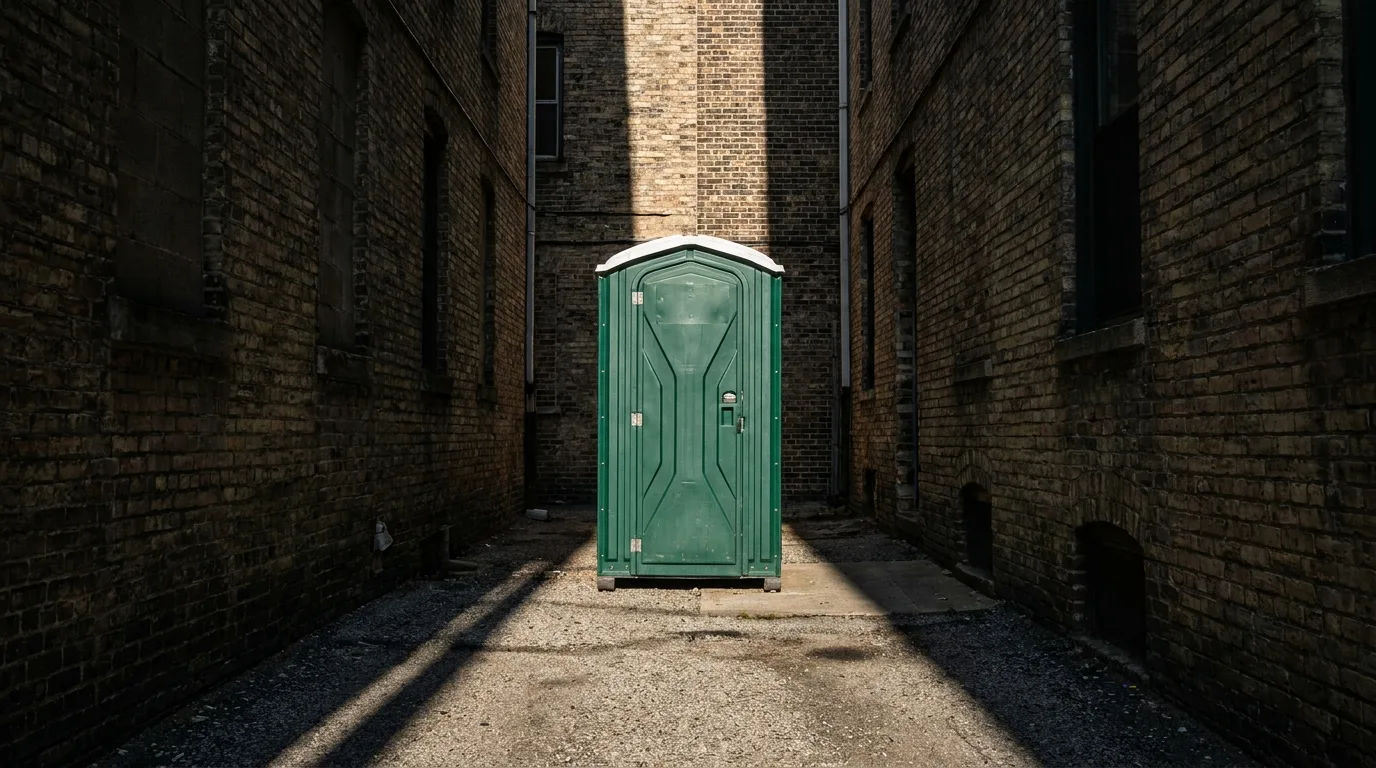
Think of it as a holding tank with a seat on top. Waste drops into the tank, the blue liquid you see is the chemical treatment, and it does two jobs: it breaks down waste and it masks smell between services. There is no flush, no water line, nothing to freeze or back up the way household plumbing can. A standard porta potty rental from Lafayette Porta Pros stands about 92 inches tall and measures roughly 44 by 48 inches on the ground, small enough to fit on a job site pad without eating into work space. When the tank fills, a vacuum truck empties it through a valve, rinses if needed, and adds fresh chemical. That is the cycle, repeated on whatever interval the site needs. For a typical office crew, ANSI/PSAI Z4.3 sets one service visit per week as the baseline for up to 10 users across a 40 hour week, though busy sites in Lafayette often need more. If you are still figuring out how many units a project needs, our porta potty placement guide and our how many porta potties do I need page both walk through the math.
How Do Flushable Porta Potties Work Differently?
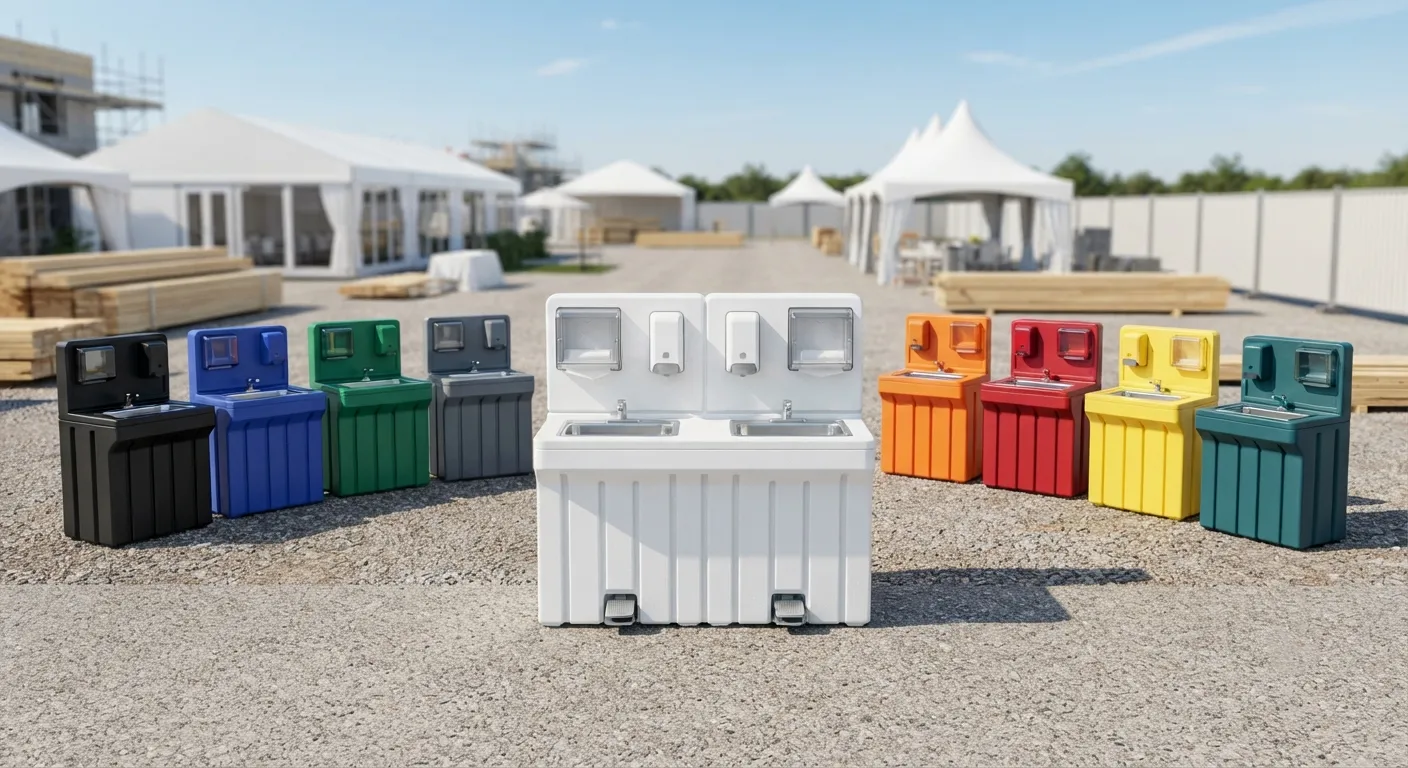
A flushable unit uses a small onboard freshwater tank and a foot pump or handle to push a rinse of water into the bowl after use, similar to an RV toilet. Waste still goes into a holding tank below, just like a standard unit, but the flush cuts down on visible waste and smell between services. Our deluxe flushable porta potty line adds this feature along with a sink in some models. That sink is really a small portable sink: a jug of fresh water, a foot pump, and a gray water tank underneath to catch runoff, the same basic idea behind any portable sink rental or handwashing station rental. Under 29 CFR 1910.141(d)(2), washing facilities need soap and a way to dry hands, and hand sanitizer alone does not satisfy that. That is why we pair sinks with soap dispensers on request, not just sanitizer stations. For jobs where OSHA 1926.51(f)(1) applies, meaning crews are applying paints, coatings, herbicides or insecticides, a real washing setup matters more than a rinse-only fix.
Why Do Construction Sites Need Porta Potties?
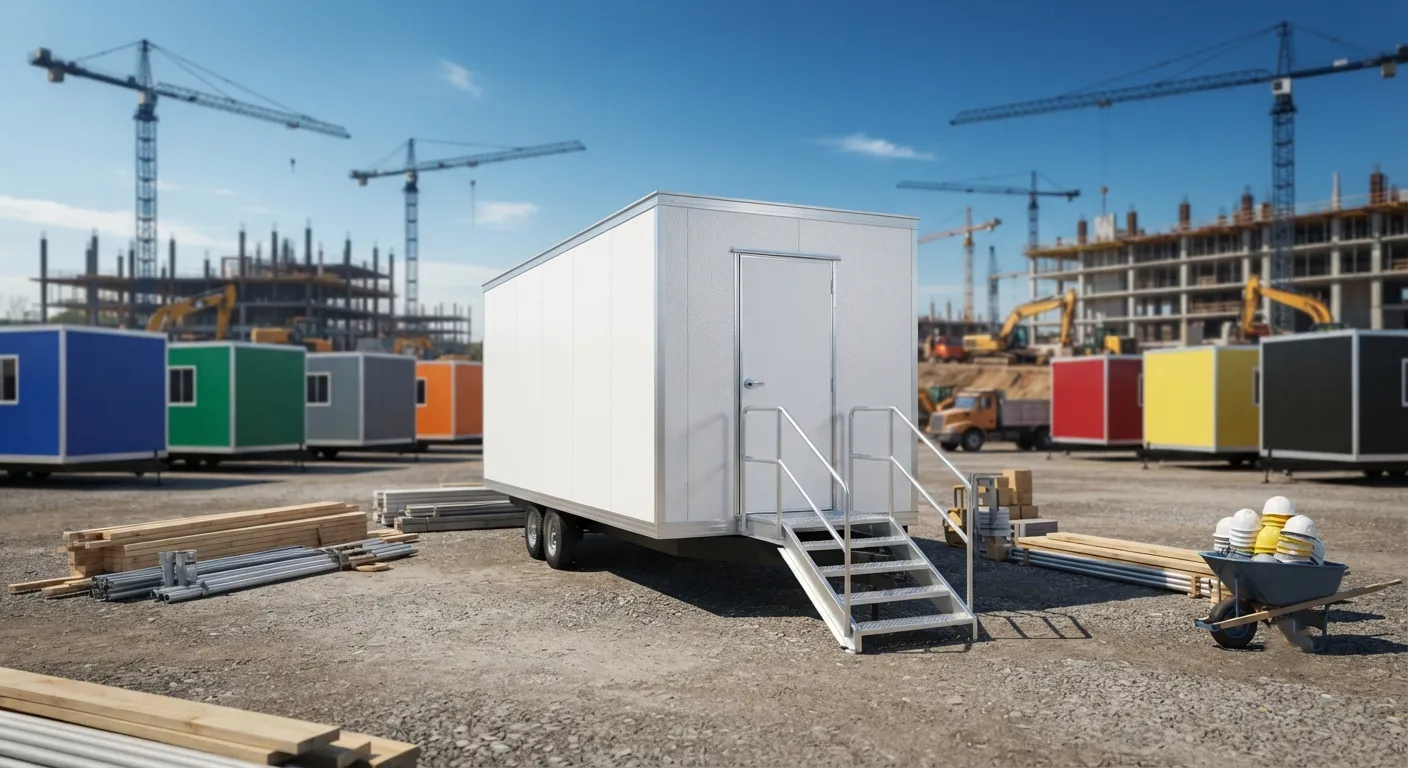
OSHA 1926.51(c) sets the ratio: one toilet for 20 or fewer workers, then one toilet seat and one urinal per 40 workers once you pass 20, dropping to one per 50 once a site hits 200 workers. That is why a construction worker walking to a porta potty across a Lafayette job site is not a courtesy, it is a federal requirement, and it is also why our construction site services page and construction dumpster rental page get bundled together so often. Field crews outside construction have their own version: OSHA 1928.110 requires agricultural operations to provide one facility per 20 hand-labor workers within a quarter mile walk, which matters for farm and agricultural restrooms around Lafayette's surrounding farmland. General industry workplaces follow OSHA 1910.141(c)(1)(i) instead of the construction ratio. Sites also need potable water under OSHA 1926.51(a)(1), which is a separate requirement from toilet counts. Our OSHA portable toilet requirements page breaks down the full ratio table if you are scoping a bigger crew.

Are Camping Porta Potties Different From Job Site Units?
Not mechanically, no. A camping porta potty works on the same tank-and-chemical system, just sized and placed for a weekend crowd instead of an eight hour shift. Event units see heavier short bursts of use, so we service them more often and place more of them per expected headcount. For accessibility, ADA Standards section 213.2 requires that when single-user units are clustered, at least 5 percent, and never fewer than one, must be an accessible unit. Our ADA accessible porta potty units meet the 36 inch clear route width called out in ADA Standards 403.5.1 and the 60 inch turning circle in ADA Standards 304.3.1. Whether you are planning a wedding restroom rental, a festival restroom rental, or a county fair restrooms setup, the units themselves do not change, just the count and the service frequency. Renters near West Lafayette, about 7.6 miles northwest of Lafayette, and Stockwell, roughly 10.7 miles southeast, get the same equipment and the same delivery standard.
Septic systems work on a related but separate principle worth knowing if you are comparing options. A residential septic tank is typically pumped every 3 to 5 years depending on tank size and household size, and a grease interceptor gets pumped once fats, oils, grease and solids reach 25 percent of liquid depth. Neither uses the blue chemical you see in a porta potty tank; that is a portable toilet treatment, not a septic tank cleaning chemical. If you are searching for septic tank cleaning chemicals for a home system, that is a different product and a different service, closer to what our septic pumping service and grease trap pumping pages cover.
How often do porta potties get serviced?
Weekly is the baseline under ANSI/PSAI Z4.3 for up to 10 users over a 40 hour week, but high-traffic sites need more. Lafayette Porta Pros adjusts frequency based on headcount and event length. See how often are porta potties cleaned for typical schedules by site type.
What chemical is used inside a porta potty?
A blue deodorizing and waste-breakdown liquid, added at delivery and refreshed at each service. It is not the same product as septic tank cleaning chemicals used in a home system. Ask about our service routine when you request a quote.
Do porta potties smell if serviced on schedule?
Regular servicing keeps odor down significantly, though some smell is normal in hot weather. Ventilation vents in the unit help. Full detail is on our do porta potties smell page.
How much does a standard rental cost per day?
Standard unit day rates run roughly 100 to 350 dollars depending on duration and delivery distance. Full pricing breakdowns live on our porta potty rental cost and porta potty rental per day pages.
Can I rent a porta potty for a single weekend event?
Yes, weekend rentals are common for events in Lafayette and nearby towns like Buck Creek, about 10.2 miles northeast. Weekend pricing differs from daily or weekly rates, so check our event restroom rental page for specifics.
Next step
Get a delivery date
Tell us the address, the dates and the headcount. We size the order and confirm the route.